Welcome back from vacation!
We'll start our discussion of The Sandman: Preludes and Nocturnes on Tuesday.
Monday, November 29, 2010

Wednesday, November 10, 2010
Semiotic Analysis
For Tuesday (November 16), you'll want to hand in your semiotic analysis exercise. Here's how you do it:
1) copy your 50 or so lines from Chapter 11 of Wuthering Heights into a new document. You can either find the text at gutenberg.org or on the page I've created here on our blog.
2) read through your excerpt carefully - - circling, underlining, or highlighting all of the semiotically significant terms or phrases.
3) on a separate sheet of paper, list the binary oppositions that you find in the text. You should quote or cite the language of the text. If the opposite term in the opposition is not "in" the text - - put brackets around it. For instance, "the dismal house" vs. [Thrushcross Grange], etc. Your goal is to analyze as closely as possible how the text is structured or organized around binary oppositions.
4) on a separate sheet or sheets of paper, you should reflect and comment on the oppositions that you discover. What patterns do you see? How do the oppositions in this particular, limited text reflect "larger" binary oppositions that structure the novel? (e.g. Wuthering Heights vs. Thrushcross Grange, gypsy vs. gentleman, wild vs. domesticated, etc.)
Make sure you work is typed up. Be sure to include your name and date on the pages. Staple all the sheets together. Enjoy!
1) copy your 50 or so lines from Chapter 11 of Wuthering Heights into a new document. You can either find the text at gutenberg.org or on the page I've created here on our blog.
2) read through your excerpt carefully - - circling, underlining, or highlighting all of the semiotically significant terms or phrases.
3) on a separate sheet of paper, list the binary oppositions that you find in the text. You should quote or cite the language of the text. If the opposite term in the opposition is not "in" the text - - put brackets around it. For instance, "the dismal house" vs. [Thrushcross Grange], etc. Your goal is to analyze as closely as possible how the text is structured or organized around binary oppositions.
4) on a separate sheet or sheets of paper, you should reflect and comment on the oppositions that you discover. What patterns do you see? How do the oppositions in this particular, limited text reflect "larger" binary oppositions that structure the novel? (e.g. Wuthering Heights vs. Thrushcross Grange, gypsy vs. gentleman, wild vs. domesticated, etc.)
Make sure you work is typed up. Be sure to include your name and date on the pages. Staple all the sheets together. Enjoy!
Wednesday, November 3, 2010
For Thursday (November 4)
Finish Volume I of Wuthering Heights.
Don't forget our semiotic analysis of part 2 of Lockwood's nightmare. You can find the text here. No need to write paragraphs etc. Just construct a table or list of binary oppositions.
Tuesday, October 26, 2010
For Thursday (October 28) and more
For Thursday, read the first 3 chapters of Emily Bronte's Wuthering Heights.
Also, take a look at the final Law and Order assignment.
And, because I mentioned it in class - - here's a sample of the very cool whiteboarding that the Royal Society of Arts has been producing and distributing:
Also, take a look at the final Law and Order assignment.
And, because I mentioned it in class - - here's a sample of the very cool whiteboarding that the Royal Society of Arts has been producing and distributing:
Monday, October 25, 2010
For Tuesday (October 26)
Read the Fiske chapter on "Character Reading"(see below). Also, be sure to finish analyzing your second Law and Order episode.
Tuesday, October 19, 2010
For Thursday (10/21)

First, make sure that you've finished up your Proppian analysis of your second Law and Order episode. You'll collaborate on the wiki page, e.g. you and your comrades should work together via the wiki page to elaborate the episode's sequence of narrative functions, dramatis personnae, oppositions, and plot summary.
Second, read both the Saussure piece and Daniel Chandler's Semiotics for Beginners. We'll discuss these two pieces in class.
Monday, October 18, 2010
For Tuesday (October 18)
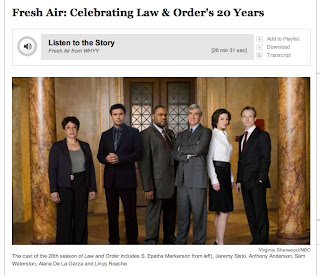
By now you should have completed the following for at least one episode of Law and Order: on the wiki page for that episode, you and your comrades should have created a plot summary, a quick outline of dramatis personnae and oppositions, and a "Proppian" sequence of narrative functions. Your page should be organized with the sequence of narrative functions at the top, separated by a horizontal line from the section on dramatis personnae and oppositions, separated by a horizontal line from the plot summary.
(It might also be helpful to insert a table of contents into your wiki page. To do this: first, highlight each section heading (narrative sequence, dramatis personnae/oppositions, plot summery) and under the "Format" menu click on "Heading." This will turn each section title into a heading. Next, go to the "Insert" menu and click on "Table of Contents." If you've properly formatted each section title as a "Heading" - - a table of contents box will appear on your page. You can position this box wherever you like - - typically the upper-right hand corner of the page. When you mouse over or click the box, a small menu bar appears below it. It's often helpful to turn "On" the text wrap function so that page text flows around your table of contents.)
Subscribe to:
Posts (Atom)